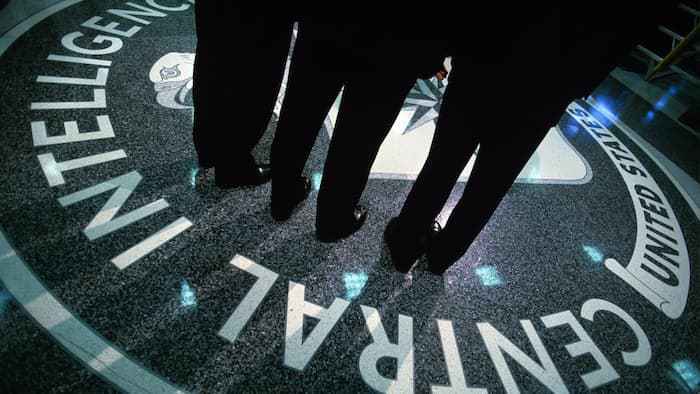
A former CIA officer suspected of helping China identify the US spy agency’s informants was arrested at JFK International Airport on Monday on charges of unlawful retention of national defense information, according to the Department of Justice.
Many of the agency’s informants were killed in a “systematic dismantling of the C.I.A.’s spy network in China starting in 2010,” according to the New York Times, which notes it was one of the American government’s “worst intelligence failures in recent years.”
The arrest of the former agent, Jerry Chun Shing Lee, 53, capped an intense F.B.I. investigation that began around 2012 after the C.I.A. began losing its informants in China. Mr. Lee was at the center of a mole hunt in which some intelligence officials believed that he had betrayed the United States but others thought that the Chinese government had hacked the C.I.A.’s covert communications used to talk to foreign sources of information. -NYT
“Jerry Chun Shing Lee, aka “Zhen Cheng Li”, 53 – a U.S. Citizen currently living in Hong Kong, began working for the CIA as a case officer in 1994, where he would spend the next 13 years with a Top Secret clearance and signing “numerous non-disclosure agreements,” according to a DOJ press release.
According to court documents, in August 2012, Lee and his family left Hong Kong to return to the United States to live in northern Virginia. While traveling back to the United States, Lee and his family had hotel stays in Hawaii and Virginia. During each of the hotel stays, FBI agents conducted court-authorized searches of Lee’s room and luggage, and found that Lee was in unauthorized possession of materials relating to the national defense.
Specifically, agents found two small books containing handwritten notes that contained classified information, including but not limited to, true names and phone numbers of assets and covert CIA employees, operational notes from asset meetings, operational meeting locations and locations of covert facilities.
Lee appeared in an New York courtroom Tuesday afternoon where he was ordered held without bail. He faces a maximum penalty of 10 years in prison if convicted. The case is being prosecuted by the U.S. Attorney’s Office for the Eastern District of Virginia.
Lee, 53, served in the U.S. Army from 1982 through 1986 and worked for the CIA between 1994 and 2007 according to an affidavit filed by an FBI agent.
The FBI agent wrote that Lee and his family left Hong Kong in August 2012 to travel to northern Virginia. Along the way, they stayed in hotels where the FBI found the books.
The small books were discovered inside Lee’s luggage, sealed in a small clear plastic travel pack.
The handwritten information inside ranged in terms of classification, but the agent said at least one page contained top secret information, “the disclosure of which could cause exceptionally grave damage to the national security of the United States.” -Reuters
The FBI agent’s affidavit also noted that classified cables written by Lee while he was a case officer describing his interactions with CIA informants corroborated what was found in the two books.
Lee was interviewed five times by the FBI according to Reuters, never disclosing that he had the books. He also met with former CIA colleagues around that time without returning the classified materials, said the Justice Department.
Over a dozen CIA informants were imprisoned or killed by the Chinese government, a serious setback for the agency, as discussed here first last May:
The Chinese government systematically dismantled C.I.A. spying operations in the country starting in 2010, killing or imprisoning more than a dozen sources over two years and crippling intelligence gathering there for years afterward.
Current and former American officials described the intelligence breach as one of the worst in decades. It set off a scramble in Washington’s intelligence and law enforcement agencies to contain the fallout, but investigators were bitterly divided over the cause. Some were convinced that a mole within the C.I.A. had betrayed the United States. Others believed that the Chinese had hacked the covert system the C.I.A. used to communicate with its foreign sources. Years later, that debate remains unresolved.
But there was no disagreement about the damage. From the final weeks of 2010 through the end of 2012, according to former American officials, the Chinese killed at least a dozen of the C.I.A.’s sources. According to three of the officials, one was shot in front of his colleagues in the courtyard of a government building — a message to others who might have been working for the C.I.A. -NYT
By the end of 2011, senior CIA officials realized they had a problem; their assets in China were disappearing. The FBI and CIA opened a joint investigation in response, run by top counterintelligence officials out of an office in Northern Virginia – code named “Honey Badger.”
As more and more sources vanished, the operation took on increased urgency. Nearly every employee at the American Embassy was scrutinized, no matter how high ranking. Some investigators believed the Chinese had cracked the encrypted method that the C.I.A. used to communicate with its assets. Others suspected a traitor in the C.I.A., a theory that agency officials were at first reluctant to embrace — and that some in both agencies still do not believe. -NYT
A Timeline of Eviction, Federal Escalation, and Municipal Activity
Pre-Eviction Litigation Context (December 2025)
By late 2025, plaintiff Billy Dwayne Frazier IV was already engaged in active litigation against landlords and the City of Cedar Rapids, alleging housing retaliation, discrimination, and habitability violations. Court filings from December 2025 reflect an adversarial posture, including a rebuttal challenging the City’s characterization of its actions as routine and disputing federal regulatory classifications related to water infrastructure.
“Once litigation is pending, best practices — and basic fairness — require written communication, coordination through counsel, and avoidance of unannounced physical presence at a litigant’s home.” — Court filing, December 2025
The December filing establishes that the City was already on notice that the plaintiffs were active litigants asserting retaliation and discrimination claims, and that the City itself was a named defendant. This context predates all events that followed.
Eviction and Immediate Federal Escalation (January 2, 2026)
Less than three weeks later, on January 2, 2026, the plaintiffs were evicted from the Oakland Road NE properties at issue. The eviction occurred at approximately 11:00 a.m. That same day, a Notice of Subsequent Material Events was filed with the court, documenting the displacement and advising that federal agencies had already become involved.
“I was evicted at 11:00 a.m. I was gone before they came. Forty-five minutes later, HUD called me.” — Will Frazier
According to the filing, within roughly 45 minutes of the eviction, the U.S. Department of Housing and Urban Development (HUD) contacted the plaintiff, acknowledged prior non-response to complaints, and confirmed that the matter had been escalated through the HUD Office of Inspector General before being referred for fair-housing review. The notice was submitted for record-preservation purposes and did not seek immediate relief.
“They apologized for not returning my calls — months of calls — and told me my file had already gone through HUD OIG in Washington.” — Will Frazier
Post-Eviction Municipal Excavation
In the weeks that followed, municipal excavation and construction activity occurred at and around the same Oakland Road properties. Photographic exhibits filed with the court depict trenching, ground disturbance, and utility-related work directly adjacent to the residences.
“They started excavating the street in front of the properties named in the lawsuit.” — Will Frazier
A supporting affidavit explains that the documentation was submitted after observing the activity without prior notice, out of concern that physical evidence relevant to the litigation — such as service lines or soil conditions — could be altered or rendered unavailable.
“I had not received prior notice that excavation or replacement work would be conducted, nor that potentially relevant physical evidence would be altered.” — Sworn affidavit, January 2026
City of Cedar Rapids Public Advisory and Response
Shortly thereafter, the City of Cedar Rapids issued a public Precautionary Boil Advisory affecting the same block of Oakland Road NE, citing a ruptured water main and loss of pressure that created potential for contamination. Screenshots of the City’s official statements and public responses were preserved and filed in the court record.
“A rupture in a water main caused a loss of pressure, creating potential for bacterial contamination.” — City of Cedar Rapids public advisory
A sworn affidavit authenticated the advisory as a true and accurate copy of the City’s public notice, expressly stating that it was submitted for documentation purposes only and without asserting causation or liability.
“This exhibit is submitted for the limited purpose of documenting the City’s public advisory, including timing and scope, without asserting fault or intent.” — Sworn affidavit, January 2026
Historical Water Incidents and Habitability Context
Court filings also include earlier documentation of water-related incidents in the area.
Supplemental materials filed prior to the eviction document pre-existing water infrastructure concerns and recurring conditions affecting the neighborhood.
Video exhibits filed in November 2025 show street-level water intrusion near residential properties, providing visual confirmation of those conditions.
“This didn’t start in January. The water issues were already there.” — Will Frazier
These materials predate the eviction and are included as contextual evidence rather than causal proof.
Why the Timeline Matters
Taken together, the filings establish a clear chronology: active litigation and regulatory disputes preceded the eviction; the eviction was followed almost immediately by federal agency escalation; and municipal infrastructure activity and public advisories occurred soon after, prompting multiple evidence-preservation submissions.
“I’m not using the courts as a microphone. I’m using them to preserve the record.” — Will Frazier
Each filing was entered with limited-purpose language, emphasizing documentation, notice, and preservation rather than conclusions. This record now forms the factual basis for ongoing housing, water, and civil-rights proceedings under review in both state and federal forums.
In the frozen heartland of America, Minneapolis has become a symbol of unchecked liberal chaos—a city where state and local officials have turned their backs on law and order, enabling fraud, violence, and open defiance of federal authority. The Trump administration’s bold crackdown on immigration fraud and illegal aliens through Operation Metro Surge has exposed the rot at the core of Minnesota’s Democratic leadership. But half-measures won’t cut it anymore. To root out the criminal networks embedded in state and local government, President Trump must invoke the Insurrection Act, deploy 25,000 to 30,000 troops, and orchestrate a coordinated takeover. This isn’t just about cleaning up one city; it’s a blueprint for reclaiming other corrupt blue states from the grip of radical progressives who prioritize open borders over American citizens.
The evidence of systemic corruption in Minnesota is overwhelming. For years, state programs have been plagued by massive fraud schemes, siphoning billions from taxpayer-funded initiatives like child nutrition, housing, and autism services. Federal prosecutors estimate up to $9 billion stolen, with most defendants tied to immigrant communities, particularly Somalis. Operation PARRIS, launched by DHS and USCIS, is reexamining thousands of refugee cases for fraud, focusing on Minnesota’s 5,600 recent refugees. Yet, Governor Tim Walz and Mayor Jacob Frey have actively aided these schemes by refusing to cooperate with ICE, releasing nearly 470 criminal aliens back into communities, and labeling federal enforcement as “racist” retaliation. Their sanctuary policies have turned Minneapolis into a haven for fraudsters, drug traffickers, and child predators, all while native Minnesotans suffer rising crime and economic strain.
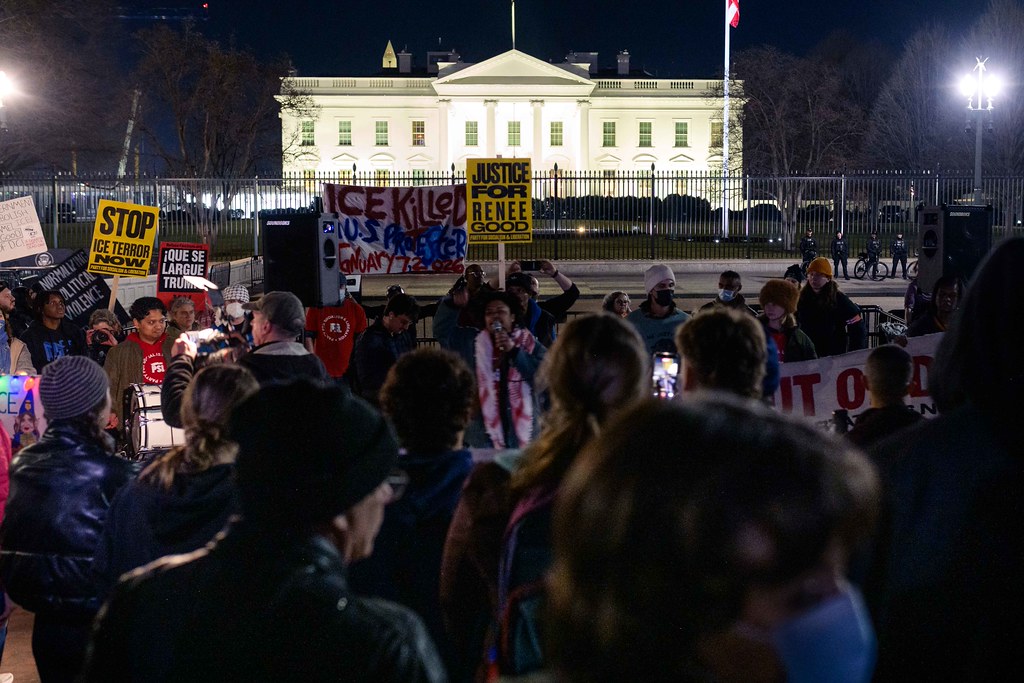
This obstruction isn’t passive—it’s deliberate sabotage. Walz and Frey have sued to halt the federal surge, claiming it’s politically motivated despite Minnesota’s fraud epidemic dwarfing national averages. They’ve instructed local police not to honor ICE detainers, allowing dangerous criminals to roam free. The DOJ is now investigating them for impeding federal enforcement, a clear violation of the law. And the violence? They’ve allowed riots to fester, with protesters clashing violently against ICE agents, throwing objects, blocking operations, and even pouring water to create icy hazards. Two shootings in a week— including the tragic death of Renee Good and a Venezuelan immigrant wounded—have escalated tensions, yet state leaders blame the feds instead of restoring order.
Worse still, this regime of radicals has blood on its hands. In June 2025, Democratic lawmaker Melissa Hortman and her husband were assassinated in a politically motivated attack by Vance Boelter, a former aide appointed under Walz’s administration. Boelter, with a hit list of 45 Democrats, also wounded State Sen. John Hoffman and his wife. Conspiracies swirl about Walz’s involvement, amplified by Trump’s posts, but the fact remains: under his watch, political violence has spiked, with officials promoting division and shielding suspects. This isn’t governance; it’s a criminal enterprise masquerading as progressive policy, agitating the left while failing to secure communities.
The numbers demand action. ICE has arrested hundreds of “worst of the worst” criminals—murderers, child rapists, and fraudsters—despite local interference. But with over 2,000 agents deployed, protests have turned the city into a war zone, outnumbering local police three to one. Judges have restricted ICE tactics, handcuffing agents from defending against agitators. Trump rightly threatened the Insurrection Act, a tool used by presidents like George H.W. Bush to restore order, but backed off—for now. Anything less invites more chaos, demotivating Trump’s base and emboldening open-borders advocates ahead of 2026 midterms.
Half measures—like limited surges or court battles—only exacerbate the issue, alienating patriots while handing victories to the left. Walz and Frey’s defiance has created a powder keg, energizing protesters who paint enforcement as inhumane. Amnesty whispers and carve-outs for workers undermine the mandate, signaling weakness. This piecemeal rot allows demographic shifts to continue, eroding America’s fabric.
The solution: Invoke the Insurrection Act now. Deploy 25,000-30,000 troops for a full takeover—expose the fraud networks, arrest complicit officials, and reconstruct governance under federal oversight. Start with Minneapolis as ground zero, then replicate in Chicago, Portland, and other blue bastions. No more excuses—with the One Big Beautiful Bill funding deportations, the tools are there. Anything less proves the “golden age” is fool’s gold, shattering the coalition and dooming the GOP. The military is the only way to deliver results and secure America’s future.
In the high-stakes arena of American politics, few issues ignite passion like immigration. For the core supporters of Donald Trump’s America First agenda, mass deportations weren’t just a campaign promise—they were the litmus test for whether this administration would deliver real change or revert to the empty rhetoric of past Republican leadership. Nick Fuentes, the outspoken leader of the America First movement, has emerged as a vocal critic, demanding tangible results: at least 1 million deportations per year, or Republicans can kiss goodbye any hope of retaining power in the 2026 midterms. Without swift, decisive action, Fuentes warns, the Trump administration risks alienating its true base, handing ammunition to pro-open borders advocates, and dooming the GOP to electoral oblivion.
Fuentes, whose “America First” platform has galvanized young conservatives with its unapologetic nationalism, has been relentless in holding the administration accountable. In a series of pointed posts on X, he has lambasted what he sees as sluggish progress on deportations, labeling them a “lie” and highlighting figures that fall far short of expectations. As of late 2025, Fuentes noted deportation rates averaging just 14,500 per month—projecting to under 700,000 over four years, a fraction of the promised scale. He has criticized key figures like Stephen Miller, calling out the lack of mass arrests and enforcement despite the hype. Fuentes’ message is clear: half-hearted efforts, such as prioritizing only criminals or offering amnesty to certain workers, are betrayals that compensate for broader failures, including foreign policy missteps and economic concessions.
The numbers tell a stark story. According to the Department of Homeland Security, as of December 2025, over 605,000 noncitizens had been deported since Trump took office, with an additional 1.9 million reportedly self-deporting via programs like the CBP Home app, which offers free flights and $1,000 incentives. The White House touts these figures as historic, claiming they’ve led to economic wins: two million native-born Americans gaining jobs while foreign-born employment drops, and declining home prices in high-immigration metro areas. Detention has surged too, with daily averages climbing from 39,000 to nearly 70,000 by early January 2026. Yet critics, including independent analyses, argue these totals inflate reality by including border returns and voluntary departures, not the interior removals that target long-term unauthorized immigrants. In fact, some reports peg actual deportations at around 390,000 for Trump’s first year, below the Biden administration’s final tally of 778,000 and well short of the pledged 1 million annually. Fuentes echoes this skepticism, updating his “Golden Age” scorecard to highlight paltry 325,000 deportations for 2025 amid other perceived betrayals like foreign aid and Epstein file redactions.
This shortfall isn’t just a policy quibble—it’s a political time bomb. Trump’s base, particularly the populist right that Fuentes represents, voted for transformation, not tweaks. If the administration fails to ramp up to mass-scale operations, it risks demotivating these voters ahead of the 2026 midterms, where control of Congress hangs in the balance. Fuentes has explicitly tied support to results: no 1 million deportations and a border wall means no votes for Republicans in 2026 or 2028. Polling already shows cracks, with Trump’s immigration approval dipping from 50% to 41% amid backlash over raids and family separations. Without proving its mettle, the GOP could see turnout plummet, allowing Democrats to reclaim ground by portraying Republicans as all bluster and no bite.
Worse, half measures exacerbate the problem. Fuentes cautions against “performative cruelty”—raids that grab headlines but achieve little, alienating communities without solving the issue. Such tactics agitate the left, energizing pro-open borders groups who paint enforcement as inhumane, while failing to deliver the systemic change needed to secure the border long-term. Amnesty carve-outs for farm or construction workers, as floated by Trump, only undermine the mandate, signaling weakness and inviting more illegal entries. This piecemeal approach hands victory to opponents, who can claim moral high ground while the demographic shifts they favor continue unchecked.
The clock is ticking. With new funding from the One Big Beautiful Bill securing $150 billion for deportations and wall construction, excuses are evaporating. Plans to expand ICE agents and detention to over 100,000 beds signal potential escalation, but words must become action. For Fuentes and his followers, anything less than 1 million deportations annually is bust— a failure that could shatter the coalition and pave the way for open-borders dominance. The Trump administration must deliver results, not rhetoric, or risk proving to its base that the “golden age” was just fool’s gold.